
There's a moment I see again and again in our postnatal classes. Baby is three, four, five or six months old. The newborn adrenaline has worn off, the visitors have stopped bringing lasagne and the sleepless nights are really starting to add up. And mum is running on fumes.
If I peek into the changing bag, I'll often find the same things: a half-eaten cereal bar, a packet of biscuits and a cold flat white. Lunch was toast standing up. Dinner was whatever was quickest. And somewhere around 3pm there was cake. Probably two slices.
Honestly? I get it. When you're exhausted, sugar and caffeine feel like the only things holding you together. But they're loans, not gifts. You get a quick lift, then a crash, and you need another one. Round and round we go.
So this blog is a gentle, loving nudge. It's not a diet (please, no diets!). It's about feeding yourself like someone who has just grown and birthed a human being, and is still keeping them alive day and night. Because you are.
Your body has done (and is still doing) so much
Let's just take a moment to remember what your body has been through. Nine months of growing a baby, using your own stores of iron, protein and minerals to build them. The omega-3 fats your own brain relies on went into building your baby's brain (and you wonder why you've got brain fog!). Calcium from your bones went into making your baby's bones, and if you're breastfeeding, it still is (and you wonder why your joints ache!). Then birth, whichever way it happened, which is a huge physical event in itself. Then recovery, healing and, for many of you, breastfeeding, which can use up around an extra 300 to 500 calories a day. All of this on broken sleep.
No wonder so many mums feel depleted by month four or five. It's not that you're doing anything wrong. It's that you're giving out far more than you're putting back in.
I love the book The First Forty Days by Heng Ou. It draws on traditions from all around the world where new mums are fed warm, nourishing, home-cooked food while their bodies recover: slow-cooked stews, broths, soups and good fats. The idea is simple. You've given so much, now it's time to be replenished.
And while those first forty days are so precious, the truth is that replenishment doesn't stop there. For most of us, it needs to carry on for months (if not years!).
Proper meals, not grazing
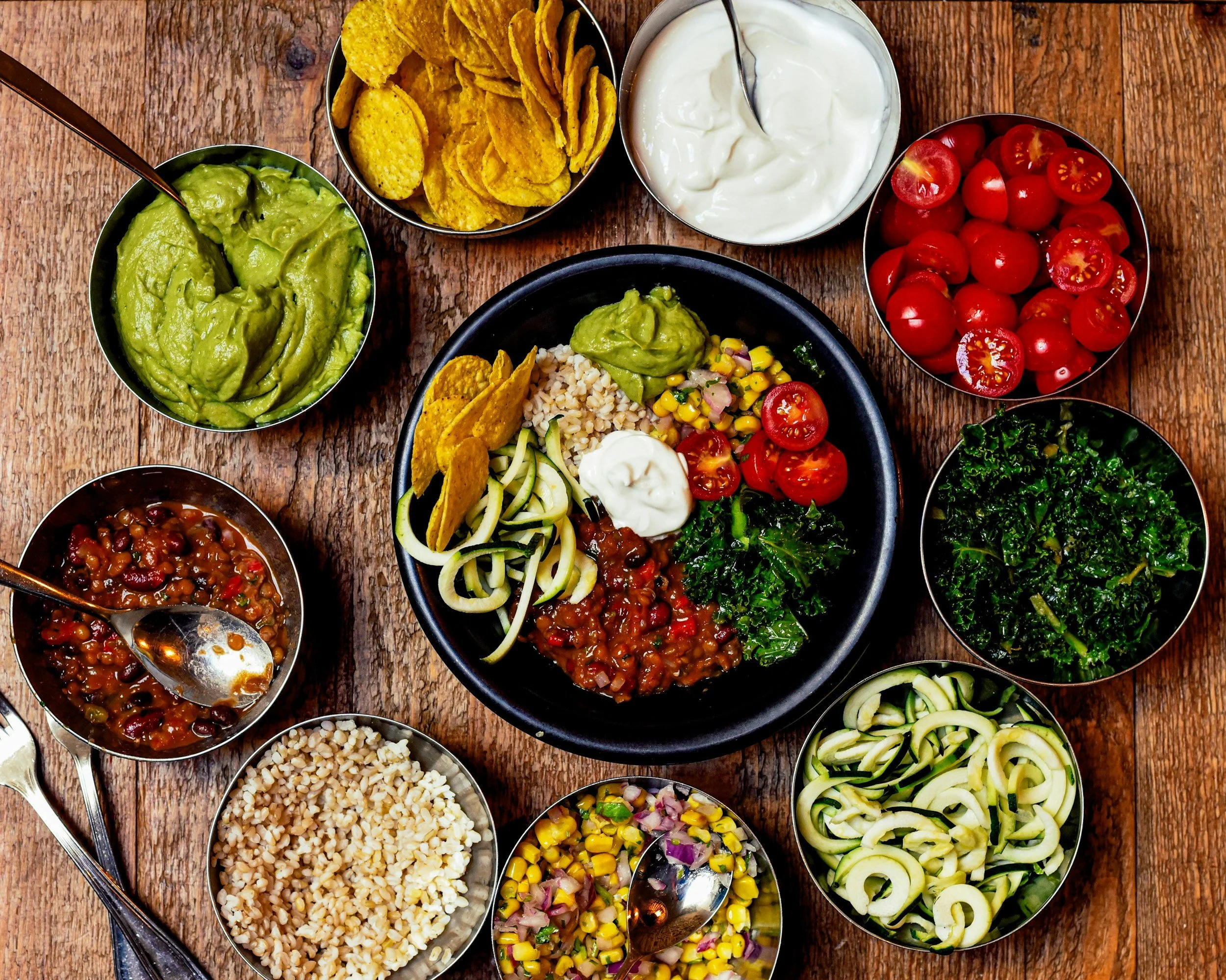
I'm a big fan of The Human Being Diet by Petronella Ravenshear. Don't let the word "diet" put you off, because the ideas behind it are really simple: eat real food, get protein and plenty of vegetables into every meal, include good fats and leave the sugary snacks behind. It's all about keeping your blood sugar steady, so your energy doesn't swing up and down all day.
For new mums, I'd take the best bits and tweak them a little. You're not trying to lose weight. You're trying to rebuild. So forget about portion sizes for now and focus on getting all the good stuff in.
Aim for 3 to 4 proper meals a day. That might look like breakfast, lunch, an early dinner and a late supper if you're up feeding through the night. Or simply eating something nourishing roughly every four hours. A real meal, sitting down if you can (I know, I know!), not a handful of crackers over the sink.
And make every meal count. Each time you eat, try to include:
Protein. Meat, fish, eggs, beans, lentils, tofu, Greek yoghurt or cheese. Protein is what your body uses to repair and rebuild, and it keeps you feeling full and steady for much longer than toast ever will.
Three different veggies or salads. Think colourful!!! A handful of spinach, some roasted squash and a few cherry tomatoes. Grated carrot, cucumber and avocado. Frozen peas count too!
A good glug of extra virgin olive oil. Drizzle it over everything. Good fats help you feel satisfied and help your body absorb the goodness from all those veggies.
Some slow-release carbs if you're hungry. Sweet potatoes, rice, oats or a hunk of good bread (think sourdough or oat and rye; bakery bread costs a bit more, but it's often far better than the supermarket stuff). Love a normal spud? Try them twice-cooked. That's right, last night's leftover potatoes, cooled and reheated, are gentler on your blood sugar than freshly cooked ones! Breastfeeding mums especially need the fuel.
Water, minerals and a bit of red meat
Drink more water than you think you need. Tiredness, headaches and that foggy feeling are so often a sign of dehydration, especially if you're breastfeeding. Keep a big bottle wherever you feed and have a glass every time baby does.
Top up your minerals. Sleepless nights, feeding and stress can all leave you feeling a bit wrung out. A few simple things many of the mums I work with find really helpful:
Swap your table salt for Celtic sea salt, so you're getting the real deal with all its natural minerals. A pinch on your food or in your water bottle.
Bananas for potassium, and an easy grab-and-go snack with a handful of nuts and seeds. Seeds are tiny powerhouses: pumpkin seeds are packed with magnesium, zinc and iron, so sprinkle them (along with chia, flax or sunflower seeds) over porridge, yoghurt and salads.
Coconut water. It's naturally hydrating, and lovely over ice on a slow afternoon.
If you eat meat, have a proper portion a couple of times a week. A big bowl of homemade bolognese or a steak is brilliant for iron, zinc and B12, and many women's iron stores are low after pregnancy and birth, and again every time your monthly bleed comes back round. Bolognese is also perfect for batch cooking. More on that below!
If you don't eat meat, eggs are your best friend. They're full of protein, choline and B vitamins, and they're quick. Scrambled, boiled, in a frittata or on top of a big bowl of veg. Lentils, beans and dark leafy greens are great too. Have them with something rich in vitamin C, like peppers, tomatoes or a squeeze of lemon, to help your body absorb the iron.
Easing off the sugar and caffeine
I'm not going to tell you to give up coffee. I'm not a monster! But try cutting back for a few weeks and see how you feel. Caffeine is a stimulant. It nudges your body to release cortisol, your stress hormone, so when you're already exhausted it can leave you feeling more wired, anxious and on edge, as if your body is in a bit of a panic. Swapping to decaf, or exploring the wonderful world of herbal teas, can make a real difference. If you're breastfeeding, the NHS suggests keeping caffeine to under 200mg a day (about two mugs of coffee).
The same goes for the biscuits, cereal bars and cake. Here's the thing about sugar: it doesn't just give you nothing, it actually takes. Your body needs nutrients like magnesium, chromium and B vitamins to process sugar, and refined sugar doesn't bring any of those with it. So every time you reach for the biscuit tin, your body dips into its already low reserves to deal with it. Add the spike and crash in your blood sugar, and you end up more tired, more hungry and craving more sugar. It's a sneaky little cycle.
The more regular, nourishing meals you eat, the less you'll find yourself craving it. And if you must (and some days you must!), have your treat straight after a protein and veggie-rich meal, when your blood sugar is nice and steady. Ideally a couple of squares of dark chocolate, or some homemade bark: chopped dates, a swirl of peanut butter and dark chocolate, set in the fridge and broken into bites. Delicious!
Get outside
Food isn't the only thing that fills you back up. Fresh air, nature and daylight do wonders for your energy and mood. Daylight helps reset your body clock (so precious when your nights are all over the place), and sunshine helps your body make vitamin D.
A walk in the park, a stroll by the sea or just sitting in the garden with a cuppa all count. Early morning and late afternoon are perfect, and in summer they're also the gentlest times for your baby's skin, avoiding that strong midday sun.
Making it doable (with a baby on your hip)
I know what you're thinking. "Clare, I can barely brush my teeth, let alone cook three-veg meals four times a day!" Fair. So here's how to make it work in real life.
Cook once, eat three times. A big pot of bolognese, chilli, dhal or stew on a Sunday becomes lunch on Monday, dinner on Tuesday and a few portions in the freezer.
Ditch the ready meals. They're tempting, but most are low on the good stuff. Simple home cooking doesn't need to be fancy. Eggs, a bag of salad and some leftover roast veg is a brilliant lunch.
Prep while baby naps (or sits in the bouncer and watches). Chop a load of veg, roast a tray of squash and sweet potato, boil half a dozen eggs. Future you will be thrilled. And make it easy on yourself: traybakes are quick, nourishing and leave you with just one tray to wash.
Use the Helpful Jobs list. When people ask "what can I do?", ask for a home-cooked meal or a stew for the freezer. It's the best present.
Keep the easy stuff in. Tinned fish, frozen veg, pre-cooked lentils, eggs, Greek yoghurt, avocados, nuts and bananas. All nourishing and all fast.
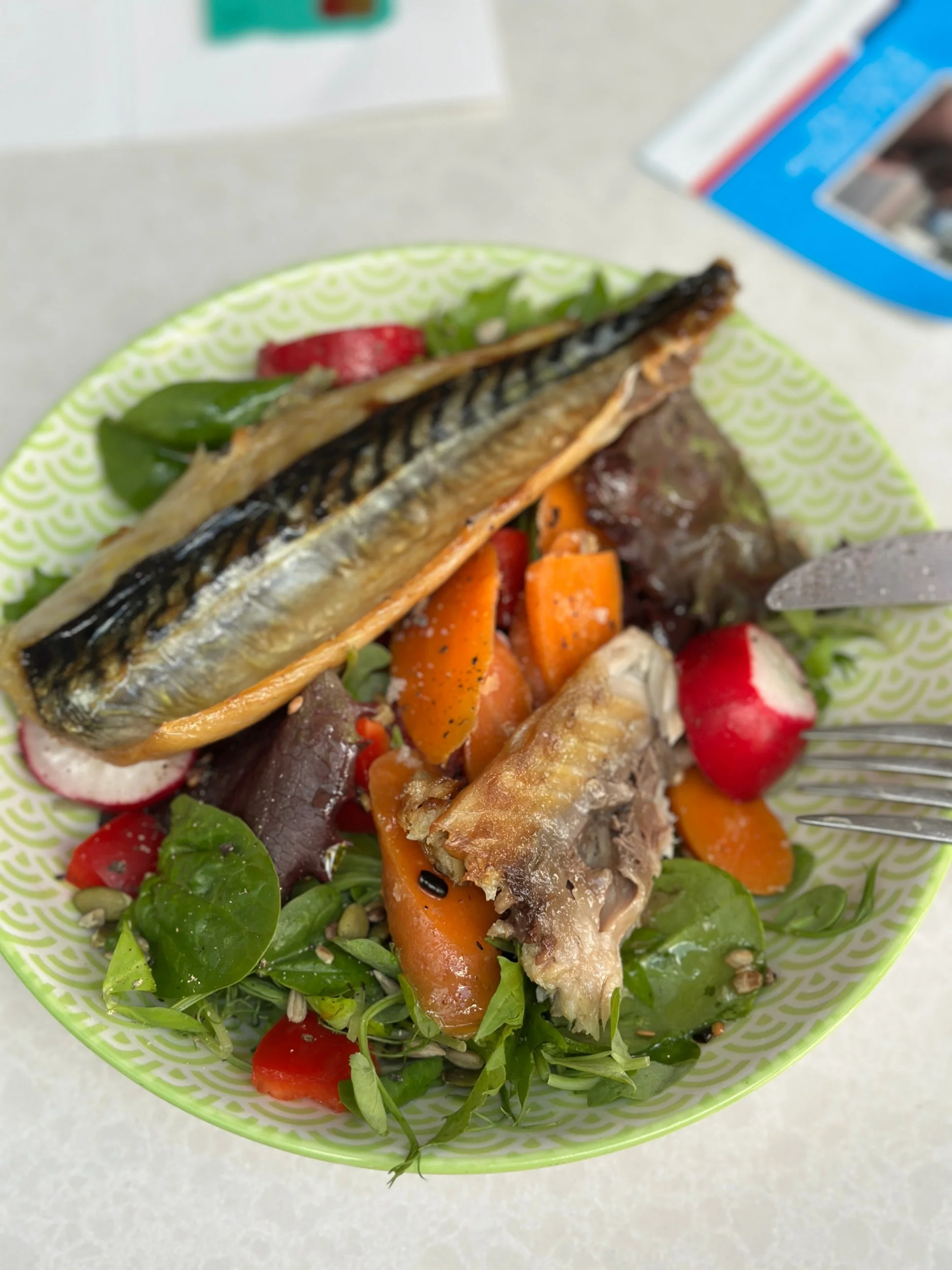
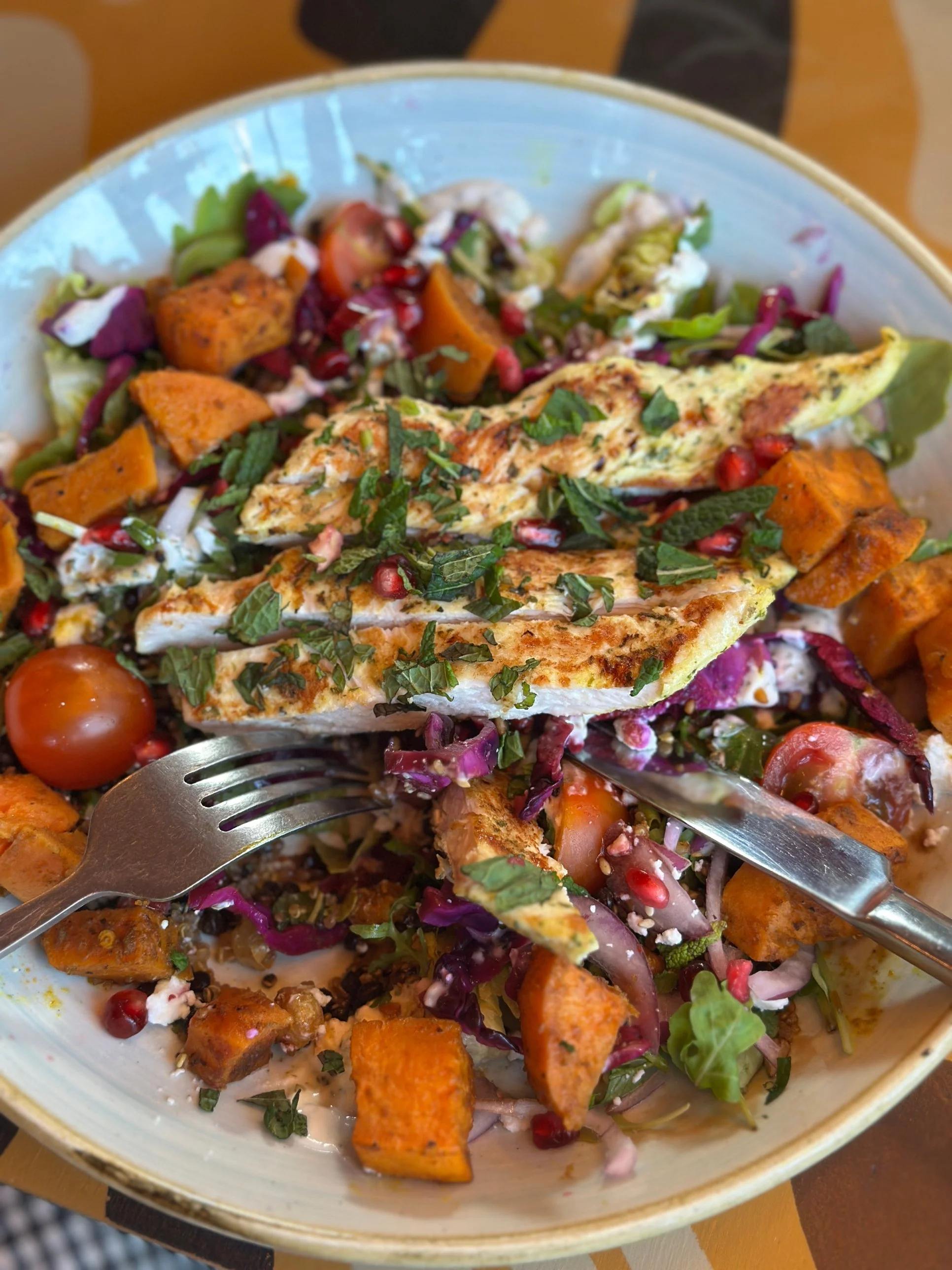
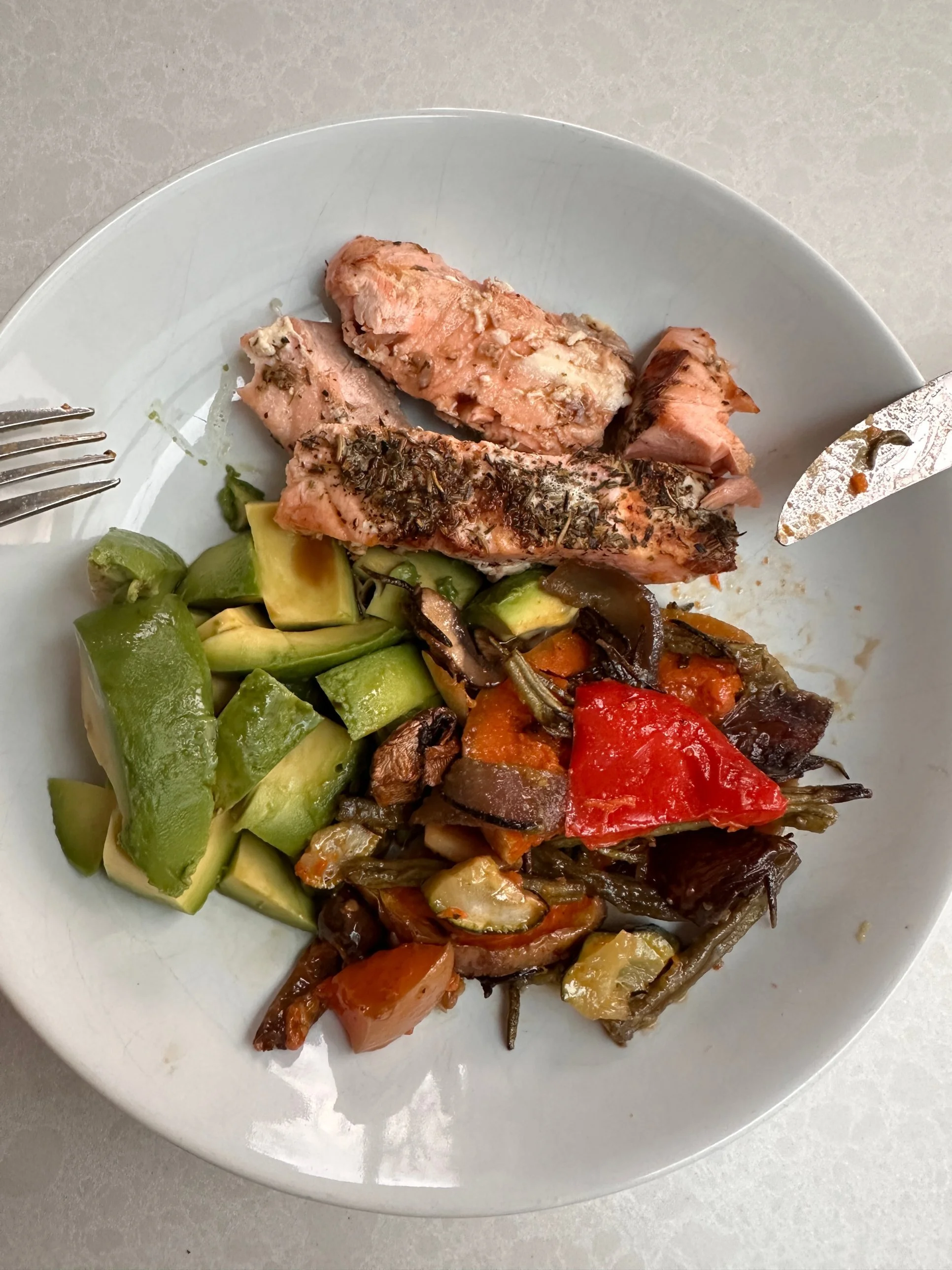
A few of my favourite quick meals:
Scrambled eggs on sourdough with spinach, tomatoes and avocado, with a good drizzle of olive oil.
A big bowl of bolognese with a side salad of leaves, cucumber and grated carrot.
Salmon, roasted sweet potato, broccoli and peas.
Chicken, chickpea and veg traybake. One tray, no fuss.
Lentil and veg soup with a hunk of bread and some cheese.
Greek yoghurt with banana, oats, nuts and seeds (perfect for that 3am feed!).
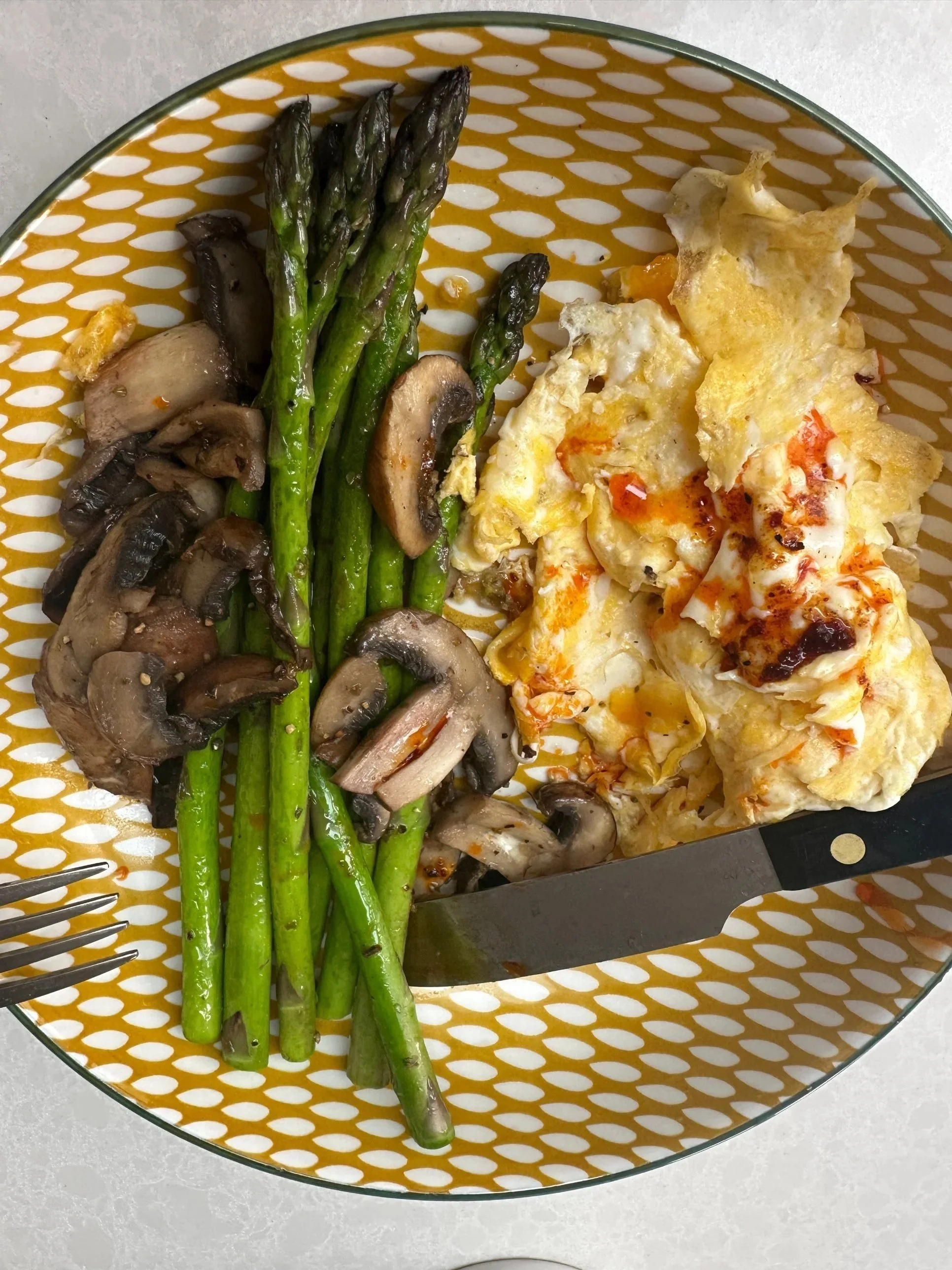
Fill your cup (and your plate)
You can't pour from an empty cup, and you can't run on cake and coffee forever. Give it two or three weeks of proper meals, more water and a little less sugar, and see how you feel. Many mums tell me the difference in their energy, mood and patience is huge. And when we feel better, we have more capacity and more energy, and here's the thing: we parent better too.
It can help with some of those other postnatal niggles too. Around three to four months after birth, lots of mums notice their hair coming out in handfuls. That’s mostly hormonal and very normal, and it usually settles by your baby’s first birthday. But your hair needs protein, iron and zinc to grow back strong, so a well-fed body gives it the best chance. The same goes for achy joints. Hormones, feeding positions and carrying a growing baby all play their part, but topping up your protein, calcium, magnesium and omega-3s gives your body what it needs to repair and recover.
Be kind to yourself along the way. Some days will be beans on toast and that's absolutely fine. This is about nourishing yourself, not being perfect.
A gentle note: if you're feeling exhausted no matter what you eat, please speak to your GP or health visitor. Low iron, vitamin D and thyroid changes are common after birth, and a simple blood test can check. The NHS also recommends a daily vitamin D supplement for breastfeeding mums.
If you'd like some company, gentle movement and a proper chat about how you're really doing, come and join us at Mum & Baby Postnatal Yoga. And for lots more on recovery and those early months, have a look at Fourth Trimester: The Honest Guide. I also work people on a 1:1 basis to improve overall wellness and energy. Give me a shout if you want a session!
Book Mum & Baby Postnatal Yoga
Explore Fourth Trimester: The Honest Guide